These light, fresh and flavor-packed cold soba noodles with tuna bowls are my ultimate answer to heat-wave cooking. It’s quick to prep, beautiful to look at, and satisfying without being heavy — perfect for warm summer dinners or high-protein lunches.
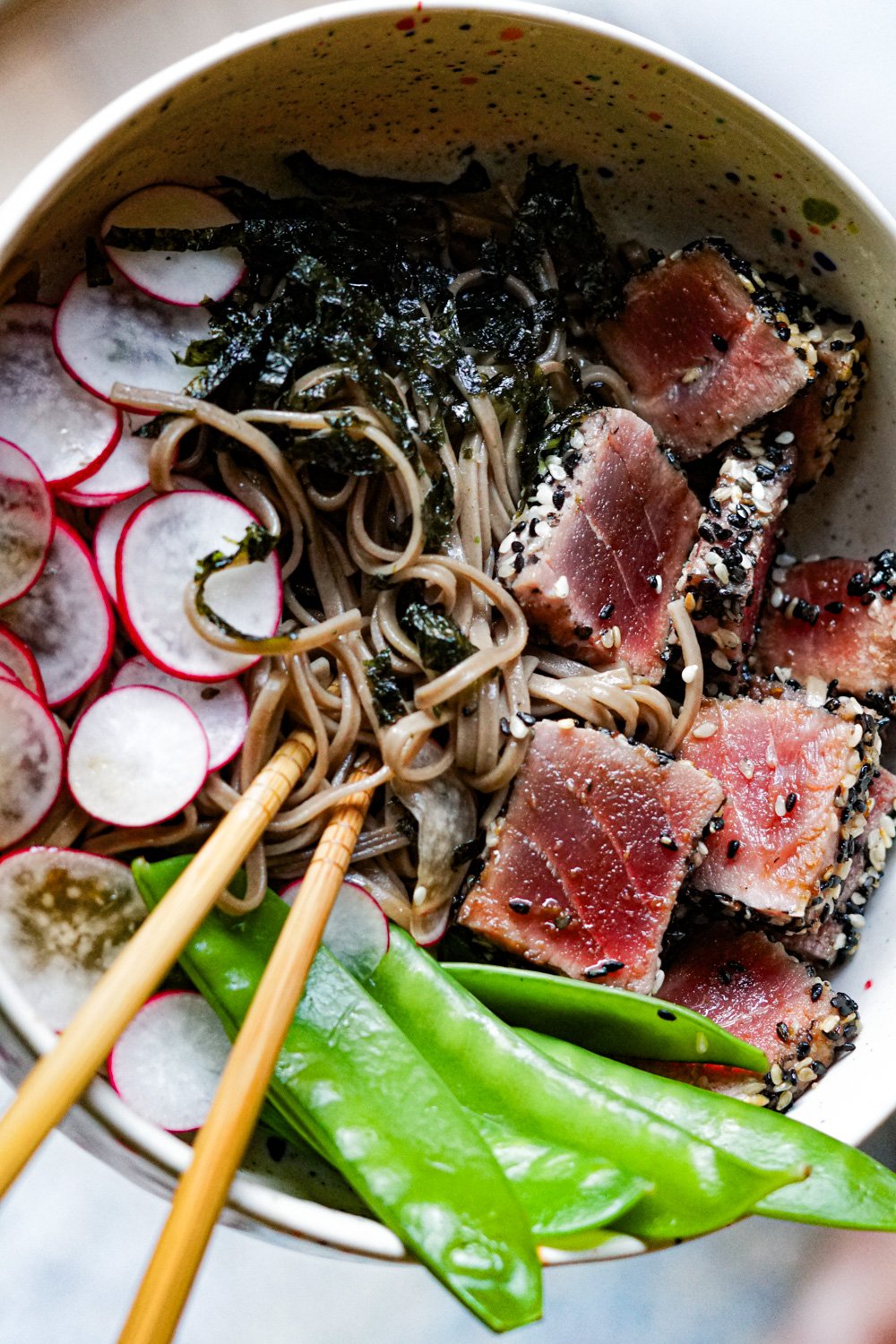
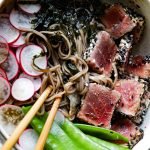
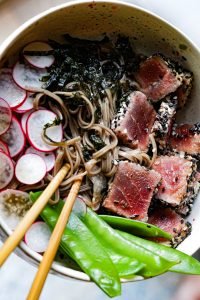
The star of this cold noodle bowl is the sesame crusted ahi tuna, lightly seared on the outside and still perfectly rare in the middle. Paired with chilled soba noodles, crisp snow peas and crunchy radish slices, this colorful bowl is both delicious and balanced. The umami and slightly sweet soy ginger dressing is ready in minutes and brings it all together.
Why You’ll Love This Bowl
- Ready in under 25 minutes.
- High in protein and healthy fats.
- Naturally dairy-free.
- Delicious hot or cold (hello, meal prep!).
- Packed with flavor, color, and texture.
- Easy to make gluten-free.
Ingredients & Substitutions
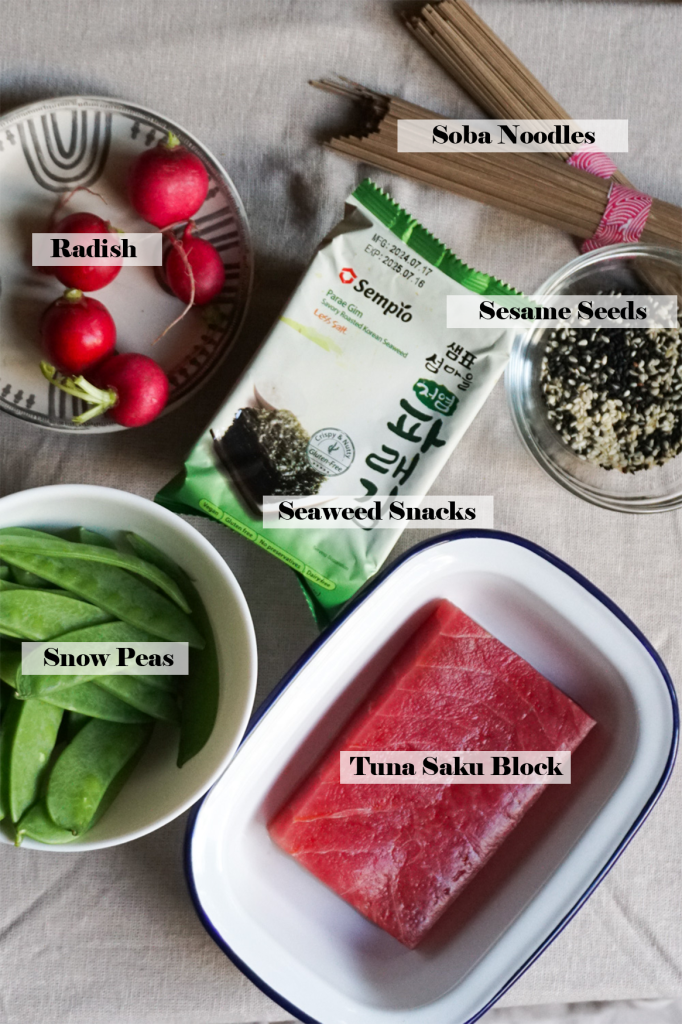
- Tuna saku (sashimi-grade) – I used a block of raw tuna seared tataki-style. You can substitute seared ahi tuna or a lightly grilled tuna steak.
- Soba noodles – Look for 100% buckwheat noodles for a gluten-free option. Otherwise, most soba noodles contain wheat. You can substitute rice noodles in a pinch.
- Snap peas – Briefly blanched for crunch and color. You could use edamame, green beans, or even cucumber ribbons if needed.
- Radish – Adds freshness and bite. Substitute with pickled daikon, thinly sliced cucumber, or shredded red cabbage.
- Toasted sesame seeds – Used to crust the tuna. You can use just black or white sesame seeds, or skip entirely if needed (though you’ll lose the texture contrast). I use a mix of both types.
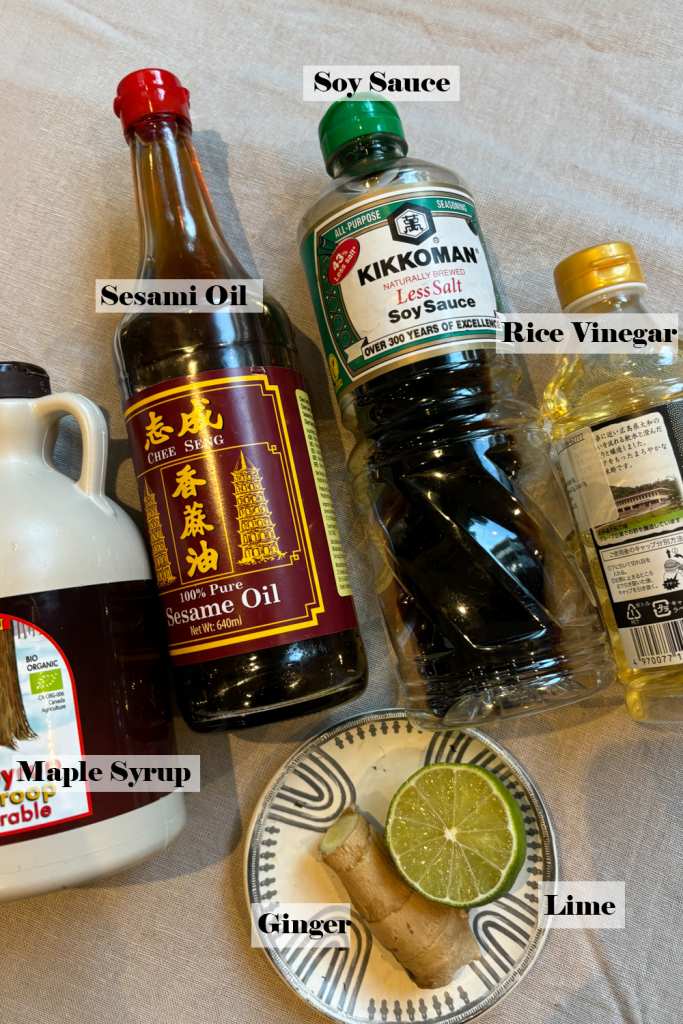
- Soy ginger dressing – A quick homemade mix of soy sauce, rice vinegar, sesame oil, ginger, and a hint of sweetness. You can also use a bottled Asian-style dressing in a pinch, but homemade is recommended for best flavor.
- Korean seaweed snacks – Crumbled or cut into thin strips for garnish. You can also use regular nori sheets, toasted and snipped into ribbons.
How to Make Soba Noodles with Tuna Bowls
1. Cook the Soba
- Boil soba noodles according to package instructions (usually 5–6 minutes).
- Drain and immediately rinse under cold water. Set aside to cool completely. Optionally mix in a teaspoon of sesame oil to ensure they don’t stick.

2. Prepare the Tuna Tataki
- Pat the tuna dry, brush with sesame oil, and season lightly with salt.
- Press sesame seeds onto both sides.
- Sear in a very hot pan for 20–30 seconds per side — you want the edges golden, center raw.
- Let rest for 2–3 minutes, then slice against the grain.

3. Blanch the Snap Peas and Slice Radish
- Immediately transfer to ice water, then drain.
- Boil or steam briefly (30–45 seconds) until bright green and crisp-tender.
- Slice the radishes thinly

4. Make the Soy-Ginger Dressing
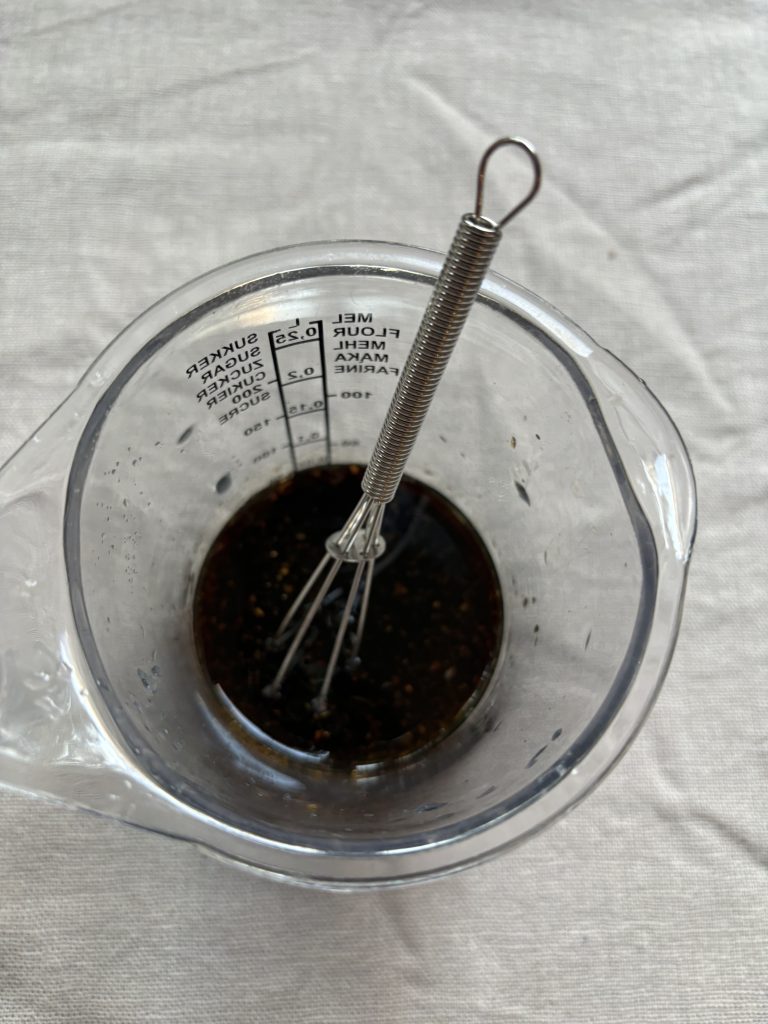
- Whisk all ingredients together. Taste and adjust: add more vinegar for tang, or honey for sweetness.
5. Assemble the Soba Noodles with Tuna Bowls
- Top with shredded or snipped Korean roasted seaweed or Japanese nori.
- Place soba noodles as the base.
- Neatly layer radish slices, snap peas, and sliced tuna tataki.
- Drizzle dressing over the tuna and a bit on the noodles.

Variations & Add-Ons
- Try a spicy mayo drizzle or wasabi ponzu
- Swap tuna for seared salmon, boiled egg, or tofu (vegan friendly!)
- Add edamame, avocado, or pickled cucumber
FAQs: Soba Noodles with Tuna Tataki
Can I meal prep this?
Yes! Keep the components separate and assemble just before eating. The tuna holds well for 1–2 days in the fridge.
What is tuna saku?
Tuna saku is a neatly cut, rectangular block of sashimi-grade tuna, usually from the leaner part of the fish like yellowfin or bigeye. “Saku” means “block” in Japanese. It’s flash-frozen for freshness and prized for its clean shape and smooth texture — ideal for sashimi, tuna tataki, sushi, or poke bowls.
Can I make this ahead?
Yes. You can prep all elements separately and assemble before eating. Add nori and dressing just before serving.
What tuna did you use?
I used a sashimi-grade tuna saku block from the Indian Ocean — perfect for slicing into tataki.

More Recipes Like This
If you loved these soba noodles with tuna bowls, I think you may also enjoy these:
- Teriyaki Chicken Musubi – A fun twist on the classic spam musubi, with juicy teriyaki chicken, sticky rice, and a crisp nori wrap.
- Chicken Katsu Bento – Crispy panko chicken cutlet paired with fluffy rice, quick-pickled veggies, and tangy tonkatsu sauce—perfect for meal prep.
- Shrimp Teriyaki Bento – Juicy shrimp glazed in homemade teriyaki sauce, served with rice and fresh sides for a light, flavorful lunch.
- Tofu Teriyaki Bento – Plant-based and packed with protein, featuring golden pan-seared tofu glazed in a savory-sweet teriyaki sauce.
- Spicy Beef Enoki Rolls – Thinly sliced beef wrapped around enoki mushrooms, pan-seared and coated in a bold, spicy-sweet sauce—great as a main or side.
Or browse:
– Pescatarian Recipes
– Easy Weeknight Dinners
– Easy Bento Box Recipes
Soba Noodles with Tuna Tataki (Refreshing Summer Bowl)
Ingredients
For the tuna bowls
- 150 g dry soba noodles 100% buckwheat for gluten-free option
- 200 g sashimi grade tuna saku block
- 100 g snow peas
- 5 red radishes
- 4 pieces roasted seaweed snack rectangles optional
- 1 tbsp white sesame seeds
- 1 tbsp black sesame seeds
For the soy-ginger dressing
- 2 tbsp soy sauce or tamari for gluten-free option
- 1 tbsp rice vinegar
- 1 tsp maple syrup
- 1 tsp sesame oil
- 1 tsp freshly grated ginger
- ¼ lime, juiced
Instructions
- Cook soba noodles according to package instructions. Rinse under cold water and drain well.

- Blanch the snow peas for 30–45 seconds in boiling water until bright green. Drain and rinse with cold water. Slice the radishes thinly.
- Press both sides of the tuna block firmly into a shallow plate of sesame seeds (white, black, or mixed) until evenly coated. You can also gently press the seeds into the sides for full coverage.
- Heat a nonstick or cast iron skillet over medium-high heat. Add a small splash of neutral oil (like avocado or canola). Once the pan is hot, sear the tuna for about 30–45 seconds per side, including the edges, just until the seeds are golden and the surface is cooked. The center should remain rare.
- Transfer to a plate and let it rest for 2–3 minutes to prevent moisture loss. Using a very sharp knife, slice the tuna thinly — about 0.5 to 1 cm thick (¼–? inch). Clean cuts are key to maintaining the delicate texture and appearance of the tuna. If your knife drags, wipe it between cuts for the cleanest presentation.
- Whisk all dressing ingredients together to make the soy ginger dressing.
- Assemble the bowls: Divide noodles into bowls. Arrange radish, snap peas, and sliced tuna on top. Drizzle dressing over the tuna and noodles. Finish with crushed or thinly sliced nori rectangles and sesame seeds.


Notes
-
Tuna
I used a sashimi-grade tuna saku block, ideal for searing and slicing. Let the tuna sit at room temperature for 10–15 minutes before searing so it cooks evenly and doesn’t seize in the hot pan. -
Sesame Crust & Searing
Press the tuna firmly into toasted sesame seeds on all sides, then sear briefly in a hot pan with a touch of neutral oil. Cook for about 30–45 seconds per side — you’re aiming for a crisp outer crust while keeping the center rare. -
Slicing the Tuna
Use a very sharp knife and slice the tuna into 0.5 to 1 cm thick slices (about ¼ to ? inch). Wipe your knife between cuts to keep the slices neat and clean. -
Soba Noodles
After boiling, rinse the soba noodles under cold running water to stop the cooking and remove excess starch. This helps keep the noodles springy and prevents them from becoming gummy in the bowl. -
Dressing
Pour the soy ginger dressing just before serving, ideally over the tuna or around the bowl. Avoid over-dressing to let the fresh ingredients shine.
Nutrition
This soba noodle bowl with tuna tataki proves that light and healthy doesn’t have to be boring. Whether you’re looking for a quick weeknight dinner, a protein-rich lunch, or just a gorgeous aesthetic bowl for one — this hits all the marks. If you do try this recipe, I would love to hear your thoughts in the comments!
Leave a Reply